
E-Notary UK: Digital Notarisation Guide for Londoners

Updated: Sep 3
What if the digital signature you just applied to your overseas property contract is the very reason the transaction fails at the final hurdle? When seeking an e-Notary UK specialist, many professionals assume any electronic mark suffices, yet international jurisdictions demand a level of technical rigour that standard software cannot provide. We recognise the intense pressure of a looming deadline for a cross-border deal, where the delay of a physical courier could jeopardise a high-value transaction. It's a common frustration to find your digital paperwork rejected simply because it lacks the necessary regulatory framework.
This guide establishes a precise path for using digital notarisation to secure documents that are both legally binding and internationally recognised. You'll learn how to navigate the complexities of Qualified Electronic Signatures (QES) and the specific requirements for obtaining an e-Apostille from the Foreign, Commonwealth & Development Office. We'll provide a definitive breakdown of the digital standards that ensure your documents pass through foreign registries without friction, whilst highlighting the specific categories that still require traditional wet-ink certification.
Table of Contents
The Evolution of e-Notary in the UK: Digital Standards for 2026
The landscape of legal certification in the United Kingdom has undergone a profound transformation. Whilst the traditional image of a notary often involves embossed paper and wax seals, the modern reality is increasingly digital. An e-Notary UK specialist now operates at the intersection of centuries-old tradition and cutting-edge security. This evolution isn't merely a matter of convenience; it's a robust regulatory shift that ensures the UK remains a global leader amongst Hague Convention members. By adopting the "Expert Fixer" digital model, we've moved beyond the logistical constraints of physical couriers to a system defined by immediate verification and cryptographic certainty.
At its core, e-notarisation involves the official certification of digital documents using advanced electronic signatures and secure digital seals. This process creates a tamper-evident file that preserves the integrity of the document from the moment of signing. It's not simply a scanned copy of a paper document. It's a born-digital legal instrument designed for a global economy that moves at the speed of light.
Legal Validity and the Faculty Office
The authority behind digital notarisation isn't derived from the software used, but from the rigorous oversight of the Faculty Office of the Archbishop of Canterbury. On 28 April 2026, the New Notaries (Conduct and Discipline) Rules came into force, reinforcing the standards required for digital practice. These regulations ensure that an electronic certificate carries the same legal weight as a physical seal under the Notaries (Admissibility in Evidence) Rules. By adhering to specific electronic signature standards, a notary acts as a trusted gatekeeper in the digital economy. This ensures that every digital file we certify is tamper-evident and possesses a verifiable audit trail that satisfies both domestic and international courts.
When to Choose e-Notarisation Over Physical Certification
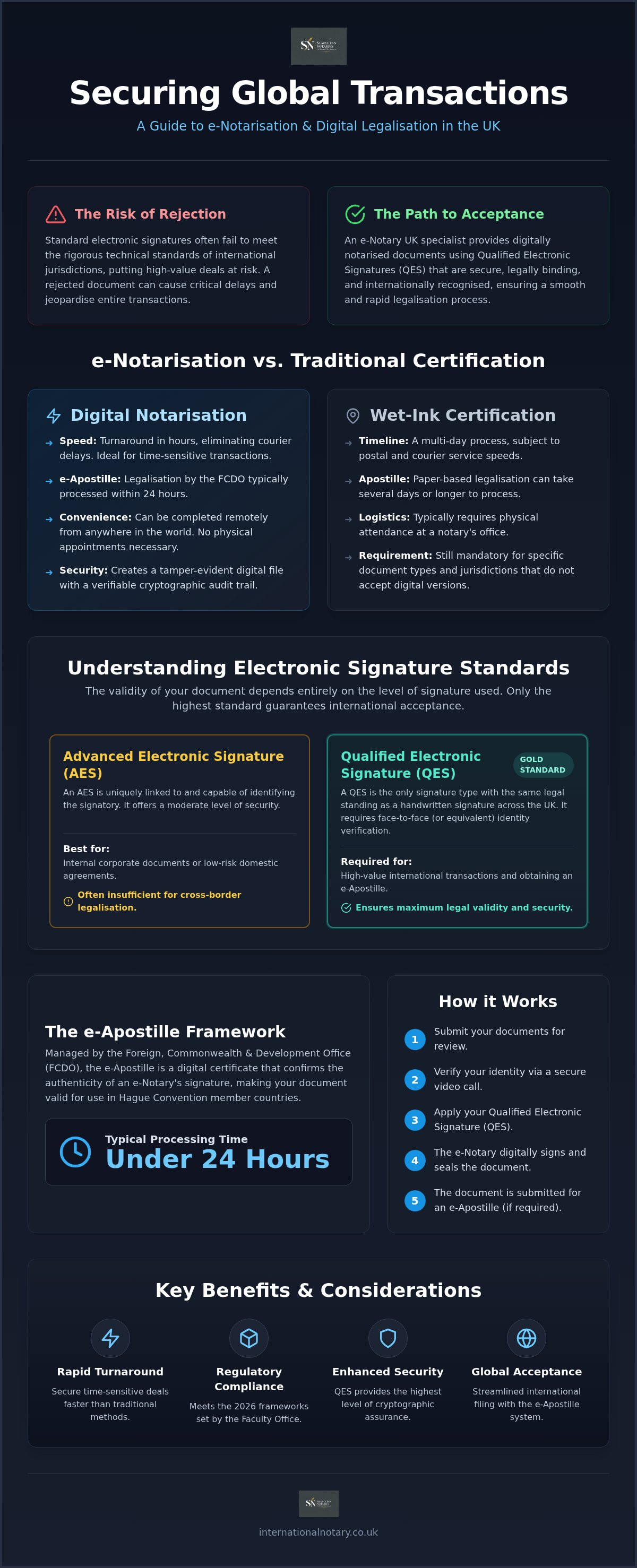
Speed is often the primary driver for choosing digital over physical certification. For urgent corporate resolutions that must reach overseas registries within hours, the e-notarisation process eliminates the delays inherent in postal services. It's also the ideal solution for clients who are travelling and cannot attend a physical Notary Central London office. We recommend this path when dealing with jurisdictions that explicitly prefer or require e-Apostilles. The Foreign, Commonwealth & Development Office (FCDO) now processes most e-Apostille applications within 24 hours, offering a streamlined alternative to the multi-day wait times often associated with traditional paper-based legalisation. This efficiency is critical for time-sensitive property deals or complex business acquisitions where every hour counts.
AES vs QES: Identifying the Correct Electronic Signature Standard
Not every digital mark carries legal weight. For an e-Notary UK professional, the distinction between signature types is critical to document acceptance. Simple signatures, such as a typed name or a scanned image of a handwritten signature, lack the cryptographic security required for high-stakes legalisation. To ensure international validity, we operate within a strict hierarchy of digital standards. Choosing the incorrect level of certification often results in the immediate rejection of documents by foreign registries or government bodies.
Advanced Electronic Signatures (AES) Explained
An Advanced Electronic Signature represents a significant increase in security compared to basic digital marks. Under the UK Electronic Signatures Regulations 2002, an AES must be uniquely linked to the signatory and capable of identifying them with a high degree of certainty. It's created using electronic signature creation data that the signatory can use with a high level of confidence under their sole control. Whilst AES is suitable for internal corporate documents or low-risk certifications, it often falls short during cross-border legalisation. Many foreign jurisdictions and the FCDO require a higher evidentiary threshold to prevent fraud and ensure the document hasn't been altered after the fact.
The Gold Standard: Qualified Electronic Signatures (QES)
A Qualified Electronic Signature is the only digital signature type that carries the same legal standing as a handwritten signature across the UK and the European Union. It's an AES that is created by a qualified electronic signature creation device and based on a qualified certificate issued by a Trust Service Provider (TSP). This is the standard we demand for most international notarial acts. The process is rigorous. We verify your identity to the QES standard through a secure video interface or a face-to-face meeting. This interaction ensures that the person signing is exactly who they claim to be, providing a level of assurance that satisfies the most demanding international regulators.
Staple Inn Notaries acts as your "Expert Fixer" to navigate these technical requirements. We ensure your digital signature meets the specific standards of the destination country, whether that involves a specific TSP or a particular biometric check. Don't risk a high-value deal on a technicality. If you're unsure which standard your document requires, consult our team to secure a compliant, legally binding solution that will be accepted abroad without delay.
International Acceptance and the e-Apostille Framework
The digital legalisation landscape is governed by the Hague Convention’s Electronic Apostille Programme (e-APP), a framework designed to modernise the verification of public documents. An e-Apostille is the digital certification issued by the Foreign, Commonwealth and Development Office (FCDO) that confirms the authenticity of a notary’s signature and seal on an electronic file. For clients utilising an e-Notary UK service, this represents the final, critical step in ensuring a document is legally fit for purpose abroad. It effectively replaces the physical paper certificate and embossed seal with a cryptographically secure digital counterpart.
The FCDO e-Apostille Process
The process begins immediately after we have applied a Qualified Electronic Signature to your document. We submit the electronic file directly to the FCDO legalisation office through a secure portal. As of August 2026, the FCDO typically processes these applications within 24 hours, with a standard turnaround of two working days. This speed is a significant advantage over traditional postal methods. Once issued, the e-Apostille is a verifiable PDF document containing a unique link. This allows the receiving authority to use the Official FCDO e-Apostille verification service to confirm the document's validity instantly. This digital-first approach significantly streamlines corporate power of attorney notarisation London, where time-sensitive business actions require immediate legalisation.
Global Jurisdictions: Who Accepts e-Notary?
Acceptance of digital legalisation is widespread but not yet universal. We see exceptionally high acceptance rates amongst EU member states, North American registries, and many Commonwealth nations. However, a critical step in our "Expert Fixer" approach is verifying acceptance with the receiving jurisdiction before proceeding. Some countries still mandate "wet-ink" signatures and physical consular stamps for specific document types. Currently, no Embassy, Consulate, or High Commission accepts e-Apostilles for further consular legalisation. If your document requires this additional layer of certification, a traditional paper-based apostille remains necessary. For jurisdictions with developing digital frameworks, we provide a structured path to ensure your documentation isn't rejected upon arrival. Our e-Notary UK specialists manage these complexities by confirming technical requirements with overseas counsel or registries before the process begins.
The Process: How Remote Notarisation Works Step-by-Step
The transition to a digital workflow requires precise preparation to avoid procedural rejection. When engaging an e-Notary UK service, the first step involves ensuring your documentation is in a high-resolution, text-searchable PDF format. This is not merely a preference but a technical necessity for the application of Qualified Electronic Signatures. Our "Expert Fixer" methodology begins with a robust preliminary review of these files alongside a rigorous digital identity check. We perform Passport and ID Certification using secure, biometric-enabled platforms to satisfy Anti-Money Laundering (AML) regulations before the formal appointment commences.
Meeting Your Notary via Video Link
Conducting the notarial act via secure platforms like Microsoft Teams or Zoom allows for a seamless execution regardless of your physical location. You'll need a stable internet connection and your original physical identity documents ready for visual inspection. During the call, you must provide a formal verbal declaration, confirming you've read the document and intend to be bound by its terms. We witness your digital signature in real-time, ensuring that the cryptographic link between your identity and the document is established under our direct supervision. This live interaction is a mandatory component of the regulatory framework, providing the necessary evidentiary weight for international use.
Document Security and Final Delivery
Once the signing is complete, we apply the official digital seal and a secondary notary signature. These files are encrypted, creating a permanent, tamper-evident record that cannot be altered without invalidating the certification. We deliver the finalised documents through secure digital transfer protocols, ensuring immediate access for your overseas counsel or registry. Whilst the original remains digital, there are instances where a receiving party might request a "true copy" in physical form. In such cases, we can provide a paper version that includes a specific notarial certificate verifying its origin from the digital original. As a leading e-Notary UK provider, we prioritise security and speed to match the pace of your global business requirements. Book your digital appointment now to ensure your documents are finalised with professional precision and regulatory compliance.
Choosing Staple Inn Notaries for Your Digital Legalisation
Selecting an e-Notary UK partner requires more than technical capability; it demands a deep understanding of the regulatory gravity involved in international certification. At Staple Inn Notaries, we combine the established authority of a Notary Central London with the digital agility necessary for 2026. We operate with a sense of controlled urgency, ensuring that your time-sensitive documents are processed with meticulous precision whilst maintaining the high register of formal legal work. Our persona is that of the "Expert Fixer", a seasoned professional who navigates complex international requirements to provide a streamlined, authoritative solution for both corporate entities and private individuals.
Our firm provides a unique safety net for London's business community. If an overseas registry unexpectedly rejects a digital certificate, we can pivot instantly. We seamlessly transition to our Mobile Notary London service to provide physical certification at your office or home. This hybrid flexibility ensures that your transaction stays on track, regardless of the recipient's technical infrastructure. It's this responsiveness that distinguishes our practice, as we understand that in high-stakes legal matters, there's no room for procedural delays or technical impasses.
Expert Fixers for Complex Corporate Needs
Corporate clients often face intricate requirements involving company resolutions, board minutes, and director ID verification. We act as authoritative gatekeepers by coordinating directly with your overseas legal counsel to verify specific wording and digital standards before the first signature is applied. This proactive communication eliminates the risk of rejection at the destination, providing a clear path to successful document acceptance in complex cross-border matters. Every step of our process is regulated by the Faculty Office, ensuring that our digital seals and signatures carry the full weight of international law and procedural compliance.
Rapid Turnaround for Urgent Matters
Efficiency is the cornerstone of our City-focused service. We've refined our workflows to eliminate unnecessary administrative friction, allowing for rapid document processing that matches the pace of global markets. Through our established links with the FCDO, we facilitate expedited e-Apostille processing, often securing legalisation within the standard two-day window or less. Amongst the fast-paced environment of the City, we remain a stable point of contact for all international certification needs. This methodical approach allows us to move swiftly from identifying your legal need to delivering a final, binding solution. Contact us today to organise your urgent e-notarisation appointment and experience the professional calm of a firm dedicated to your success.
Securing Your International Digital Future
The transition to digital legalisation represents a significant regulatory evolution, requiring a meticulous approach to cryptographic standards and international compliance. By prioritising the use of Qualified Electronic Signatures and understanding the nuances of the FCDO e-Apostille framework, you ensure your documents possess the highest evidentiary weight. It's no longer just about speed; it's about the precision of your digital certification in a global economy. As an established e-Notary UK specialist, Staple Inn Notaries provides the technical expertise and regulatory oversight needed to navigate these complexities without delay.
Our Central London firm remains dedicated to bridging the gap between traditional notarial duties and modern digital efficiency. Whether you're finalising a corporate resolution or an overseas property deal, we offer the professional calm and authoritative guidance required for success. We look forward to helping you secure your international interests with confidence and absolute procedural certainty.
Contact Staple Inn Notaries for Expert e-Notarisation Services
Frequently Asked Questions
Is an e-Notary signature legally binding in the UK?
Yes, an electronic signature certified by an e-Notary UK specialist is fully legally binding under the Notaries (Admissibility in Evidence) Rules. The Faculty Office provides the regulatory framework that allows digital certificates to carry the same evidentiary weight as traditional paper documents. For a signature to be valid, it must meet specific cryptographic standards, typically a Qualified Electronic Signature, which ensures the document is tamper-evident and the signatory's identity is verified.
Which documents cannot be notarised using e-Notarisation?
Certain documents are currently ineligible for digital notarisation or the e-Apostille process due to FCDO regulations. These include General Register Office documents such as birth, death, and marriage certificates. Additionally, ACRO Police Certificates, Disclosure and Barring Service (DBS) certificates, and fingerprint certificates must still be processed using traditional paper-based methods. We recommend checking the specific requirements of your destination country before starting the digital process to ensure your document type is accepted.
Do I need to be in London to use a London e-Notary service?
You don't need to be physically present in London to utilise our digital services. The remote nature of e-notarisation allows us to verify your identity and witness your signature via secure video link from any location globally. Whilst our office is situated in Central London, our digital reach ensures that corporate clients and individuals can access our expertise without the need for travel. This flexibility is essential for managing urgent international deadlines from abroad.
How much does an e-Apostille cost compared to a paper one?
The government fee for an e-Apostille issued by the Foreign, Commonwealth & Development Office is £45 per document. This is currently the same as the standard fee for a paper-based apostille. Whilst the statutory fee is identical, the digital route often proves more cost-effective for our clients by eliminating the need for physical couriers and international postage. The primary saving is found in the significantly reduced turnaround time, which is critical for high-value transactions.
Can I use e-Notary for a Power of Attorney for use in Spain?
Digital Powers of Attorney are increasingly accepted in Spain, but you must verify this with your Spanish lawyer or the specific registry involved. Spanish notaries operate under a strict civil law system and may require specific wording or a particular level of electronic signature. We often coordinate directly with overseas counsel to ensure the e-Notary UK process meets local Spanish requirements, avoiding the risk of rejection upon submission to the Spanish authorities.
What is the difference between a digital signature and an e-notarised signature?
A standard digital signature is a cryptographic mark applied by an individual, whereas an e-notarised signature includes a certificate of intervention by a Notary Public. The notary acts as an official witness who verifies the signatory's identity and capacity. This certification adds a layer of public trust and legal certainty that a simple digital signature lacks. It's this notarial intervention that makes the document eligible for further international legalisation via an e-Apostille.
Will Companies House accept e-notarised documents for director verification?
Companies House has modernised its systems and frequently accepts e-notarised documents for various filings, including director identity verification. This is particularly useful for international directors who cannot easily visit a UK solicitor or notary in person. However, the acceptance depends on the specific form being submitted and the current digital filing policies of the registrar. We ensure that your digital certification adheres to the latest Companies House standards to prevent administrative delays.
How do I verify the validity of a digital notary seal?
You can verify a digital notary seal by inspecting the cryptographic certificate embedded within the PDF document. This certificate confirms that the file hasn't been altered since the seal was applied by the notary. For documents that have received an e-Apostille, the FCDO provides an online verification service. By entering the unique document link into the official government portal, the receiving authority can instantly confirm the authenticity of the legalisation and the notary's standing.


Comments